 +91 8882677955
 +91 8882677955
Blog
How AI Is Transforming K-12 Education and Preparing Students for Future Careers

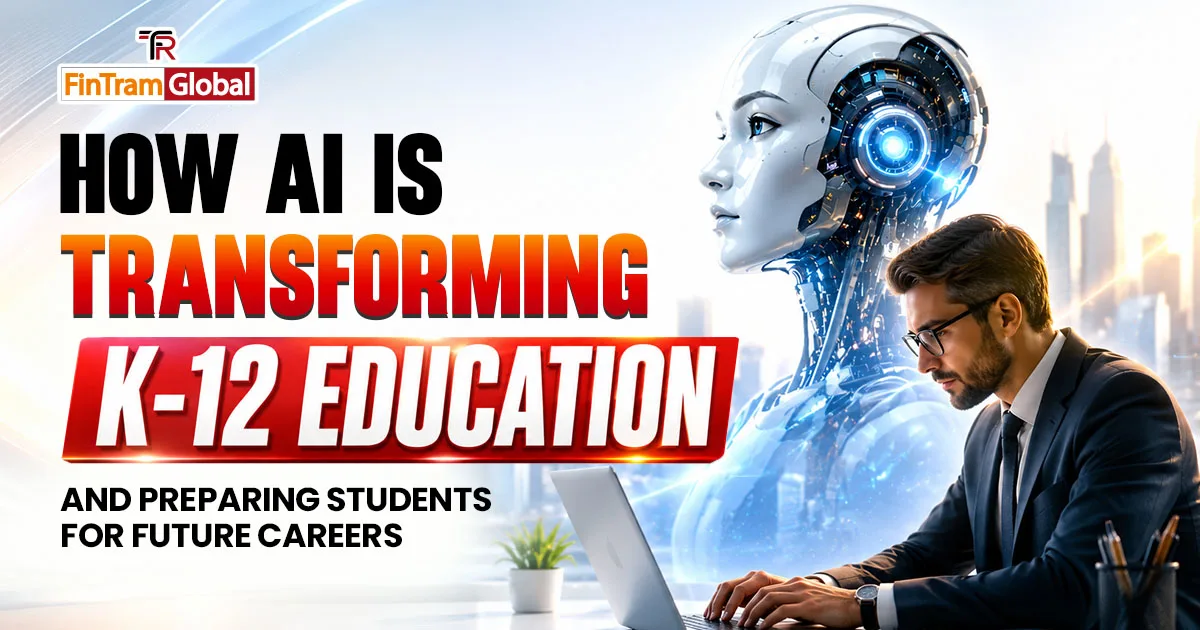
AI in K-12 education is personalizing how students learn, but the bigger story is what happens after school and which future careers you will go for. The analytical thinking, digital literacy, and adaptability built early are exactly what global employers and globally recognised finance certifications expect students to already have by the time they reach higher education.
A classroom today looks different from a decade ago, and it’s not just the smartboards. Artificial intelligence is quietly reshaping how students learn and how teachers teach, and this is intelligence that gets missed how prepared students actually are once they learn this and start building a career.
Because here’s the real shift: education was always about marks. It’s increasingly about foundation. The habits and thinking skills a student picks up in school don’t stay there — they show up years later in job interviews and, increasingly, in the professional certifications that open doors to global careers.
How AI Is Making K-12 Classrooms More Effective
Every student learns at a different pace, yet traditional classrooms have historically moved at one speed for everyone. This is changing with AI-powered learning platforms that can spot gaps in real time and provide immediate feedback instead of waiting for the next test to reveal a problem.
And teachers benefit just as much. AI-driven analysis of how students are doing means time freed up from the monotonous admin work that used to take over teachers’ days, and instead they can give students the mentoring and actual understanding-building they need.
This shift is visible in how new-generation schools are structured.
Cyboard School, an AI-powered online school in India, is a good example of what this shift actually looks like in practice. Instead of moving every student through the same material at the same pace, its AI-driven system continuously tracks how each student is performing, where they’re moving quickly, where they’re stuck, and where a concept needs to be explained a different way.
Here’s what that foundation actually turns into, a few years down the line:
| Skill Built in School | Why It Matters Later |
|---|---|
| Adaptive, self-paced learning | Prepares students for professional exams that demand independent study |
| Comfort with digital tools | Matches what employers now expect on day one, not after training |
| Instant feedback & correction habits | Builds the discipline needed for timed, high-stakes certification exams |
| Discussion-based, concept learning | Translates directly into client communication and workplace judgment |
| Problem-solving over memorization | Mirrors exactly what finance, tech, and consulting employers screen for |
Future Careers Demand More Than Academic Excellence
Good grades still matter, but they’re no longer sufficient on their own. Employers across every industry—finance, technology, healthcare, and consulting—are hiring for analytical thinking, communication, digital literacy, collaboration, and adaptability, alongside whatever technical knowledge a role requires.
Students who build these transferable skills during school carry a real advantage into higher education and, later, into a global job market that increasingly doesn’t care which country you studied in, only whether you can actually do the work.
Expert Insight
The growing importance of future-ready skills is supported by leading global research. According to the World Economic Forum’s Future of Jobs Report 2025, analytical thinking, resilience, technology literacy, and lifelong learning are among the fastest-growing skills employers will seek in the coming years.
UNESCO also highlights that AI, when used responsibly, can make learning more personalized and inclusive. Together, these findings reinforce why AI-enabled classrooms are not only improving academic outcomes but also helping students develop the digital, analytical, and problem-solving skills needed for higher education, professional certifications, and future careers.
Why Commerce Students Should Think About Careers Early
For commerce students, career planning works best when it begins before college rather than after graduation. Students will make better subject choices and build more relevant skills as they move along if they know the various pathways early on.
today commerce goes far beyond traditional accounting and banking roles. With businesses becoming more global and digital, financial analysis, auditing, taxation, investment advisory, consulting and financial technology are all growing areas. If students know early on, they can suss out which professional qualifications really align with where they want to end up.
How AI Is Changing the Finance Profession
Finance is one of the industries feeling AI’s impact most directly. Bookkeeping, data reconciliation, financial reporting, and basic risk analysis are increasingly handled by intelligent systems rather than by hand.
But this isn’t really a story about replacement. It’s a story about what employers now expect instead. Organizations want finance professionals who can interpret data, apply real professional judgment, communicate insights clearly, and use digital tools fluently — not just process numbers.
Worth pausing on: the tasks AI is automating fastest in finance — data entry, reconciliation, basic reporting — are exactly the tasks that used to fill a fresh graduate’s first two years on the job. That’s not a loss for new professionals. It’s a push toward learning judgment and strategy earlier than previous generations had to.
That means students preparing for finance careers now need more than accounting fundamentals. They need genuine comfort with technology, analytical thinking, and a habit of continuous learning that doesn’t stop at graduation.
Building a Global Finance Career Starts With the Right Qualification
As businesses keep expanding across borders, employers increasingly value professionals who pair technical expertise with strong communication and digital ability — the same combination schools are now trying to build from an earlier age.
For students genuinely interested in finance and accounting, globally recognised qualifications like ACCA, US CPA, US CMA, and Enrolled Agent (EA) provide the specialised, internationally portable knowledge that general degrees alone don’t cover. Each one opens a slightly different door:
| Certification | Best Suited For | Typical Career Direction |
|---|---|---|
| ACCA | Students eyeing global audit, reporting, or advisory work | UK, Europe, Middle East, and Asia-based firms |
| US CPA | Students targeting US-based or US-listed employers | American public accounting and audit roles |
| US CMA | Students drawn to strategy, budgeting, and internal finance | Management accounting and corporate finance |
| Enrolled Agent (EA) | Students interested specifically in taxation | US tax advisory and offshore tax delivery teams |
FinTram Global works specifically in this space, helping students understand these career pathways and choose between globally recognised finance qualifications based on where they actually want their career to go.
Why Global Professional Certifications Matter
A university degree builds the academic base. Employers increasingly look for something more specific on top of it, a globally recognised credential that proves specialised, practical knowledge.
For students eyeing international finance careers, ACCA, US CPA, US CMA, and EA open doors across accounting firms, multinational companies, global capability centers, and consulting practices. These certifications are built around real business scenarios, ethical decision-making, and financial reporting—the parts of the job that stay genuinely valuable even as AI reshapes the profession around them.
AI Will Change Jobs, Not the Need for Professionals
A common question people ask is whether AI will eventually make finance professionals obsolete. In reality, it has much more to do with automating repetitive tasks than eliminating skilled jobs. Even as data entry and basic reconciliation are increasingly software-driven, interpreting financial information, advising clients and making strategic calls still require real human judgment.
The people who can make this change are the ones who get it and understand the technology, not the ones fighting it.
From School Learning to Global Opportunity
Career readiness is not a one-time decision at age 22. The journey starts with a good education at school and is refined by specialized professional study.
For commerce students, becoming familiar with international qualifications earlier in their studies will provide a clearer path into careers in accounting, finance, taxation and consulting. Schools like Cyboard School lay the initial foundation of digital literacy, adaptability and independent learning and organisations like FinTram Global help convert that foundation into a concrete certification pathway when the students are ready.
Online Tutoring and Homework Help
Online tutoring and homework help give students access to academic support outside regular classroom hours. Students can use these services to clarify difficult concepts, work through assignments, prepare for tests and get guidance when they are struggling with a particular subject. This additional support can make learning more flexible while helping students build stronger subject knowledge and independent study habits.
Final Thoughts
AI is reshaping both classrooms and workplaces, but the underlying goal hasn’t changed: preparing students for careers that actually last. Schools build the future-ready habits; professional qualifications turn those habits into specialised, globally recognised expertise.
Students who embrace technology early, keep learning deliberately, and start thinking about their career path before it becomes urgent will be the ones best positioned for a future where human expertise and AI work alongside each other, not against each other.